Ever since I can remember I have been fascinated by science and magic, and in this universe the closest thing to that is electronics. When I was somewhere around 7 years old my Grandma gave me a pocket radio for my birthday which I promptly took apart and tried to understand. The strange coils and mysterious coloured nodules both entranced and infuriated me with their mysteries and I became determined to solve them
Listen as narration on YouTube
By the time I reached secondary school I was already covered in small solder burns and permanently smelled of flux. I harassed my teachers until they finally gave me access to the science labs and I would spend my lunchtimes hidden away from everyone else in rooms full of dangerous machinery and chemicals, including acids and even radioactive materials and I taught myself how to make PCBs on a 286 running LAYO, and plot them directly onto copper board.

Around age 15 I discovered heavy metal and guitar and instantly knew this was what I wanted to do with my life. I cast aside my studies and began to play constantly, day and night. But I was also poor and I couldn’t afford an amplifier, so I built one from an old kitchen cabinet, 16 car speakers, and some MOSFET power modules. It was huge and loud. By the time I joined a band in the mid 90’s I was already making pedals for myself and my friends too.
Wales (1997-)
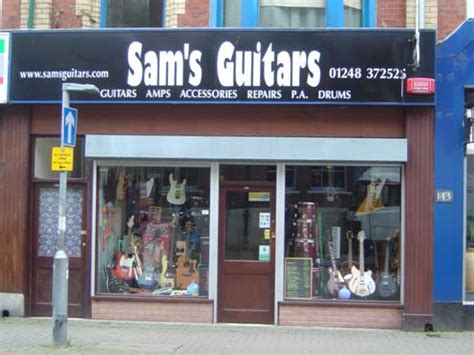
Naturally I needed additional income. When the local guitar shop found out I could solder he showed me a basement full of broken equipment. People had been leaving things with him for many years, but he had never found a tech to fix them. I had my pick of hundreds of amps and I would take away a few at a time, attempt to fix them, and bring back the success stories.
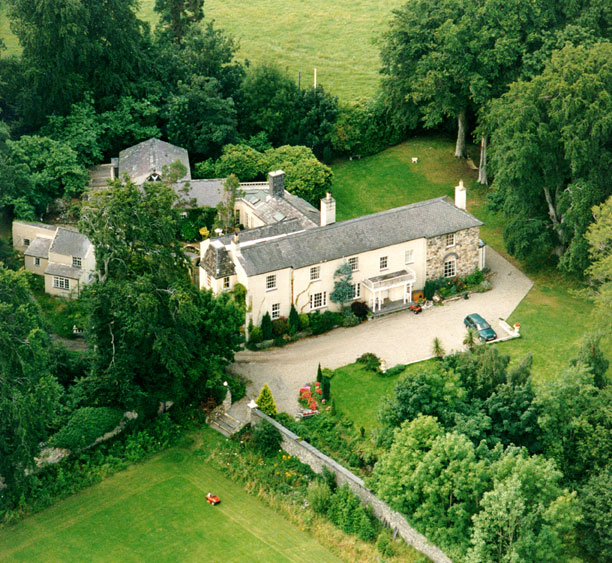
One of those pieces of equipment was an Ultra Harmonizer. It turned out that it belonged to Bryn Derwen Studios, a huge residential studio in the heart of Snowdonia, and it had been to three different techs already, none of whom had succeeded in fixing it. The outcome was that Laurie contacted me to ask if I’d also work for him, and I was honoured to accept. I spent quite some time at the studios and it gave me a chance to work on much more premium equipment including large format analogue consoles, vintage rack gear, and even a genuine Hammond Leslie.
Salford (2003-)
After a while I outgrew North Wales though, and wanted to move forward. There was no easy way to do this, financially, so I signed up for a degree in Audio Technology at the University of Salford and moved away as a mature student in 2003. I never really intended to stay at the University, my goal was still to pursue my band, but I got on so well there with everyone that I ended up coming back to become an hourly paid lecturer around 2008. The money was fantastic and I had so much free time I could pursue everything else I wanted. I ended up studying and teaching in dozens of different areas from Audio Maintenance and Studio Design to Virtual Reality, Software and even getting my PhD in Robotics whilst also building pedals, travelling to many festivals and generally having a most excellent life.
Around 2012 I started to become frustrated with the changes happening in the University though. The culture was moving away from an academic focus to financial, as it was in all universities: More hours, more responsibilities, less pay, less freedom, less respect. I started studying for a Masters Degree to cover my back in case things went wrong. I’d also been running Audiostorm as a side-hustle for years and was beginning to wonder if it could work as a full-time business, so I started testing out ideas whilst I worked. I made and sold various Solo Booster pedals and Overdrives but they were time-consuming to build and I wasn’t satisfied they were good enough.
Tone Lord (2017)
In 2017 I launched the original Tone Lord via Kickstarter. This pedal was my first compact enclosure pedal and the first where I’d really dug deep to try and consciously understand what made a pedal great. I spent a long time deep diving into what players wanted and actually used, not just the technicality of the build. I was really pleased with the outcome and the positive feedback. It was a beautifully designed, brilliant pedal and well-received.
My only grumble was that it felt a little generic, a little too simple, the raw essence of what I wanted was there, the buttons, the UX and UI, the layout were good, but it felt unrefined, the switches were too small and all too DIY.
Then the final straw for my work life came in 2019 when my wife was diagnosed with cancer. Nat always comes first, I’d gained my PhD, and I decided the time was right to walk away from the University and focus upon looking after her.
My wife was declared clear of cancer in Feb 2020.
Quad Screamer (2021)
In 2021 I took the plunge, rented a workshop and formally began working on Audiostorm full-time. But my timing couldn’t be worse. I was flat broke from the previous years and living on my credit-card, Brexit was really starting to close sales channels, and Covid-19 had decimated supply. I couldn’t get the parts I needed and even though there had been a huge surge in demand from stay-at-home players I wasn’t ready to deliver and didn’t have the stock.
Despite everything I stuck to my guns and delivered the Quad Screamer Kickstarter in 2021. This pedal built on everything I’d learned and was really my next evolutionary step. It offered lots more usability and complexity all wrapped up in a much more appealing package. It was clever and intuitive and addressed all the things I saw as weaknesses in the Tone Lord. The tone was to die for too, and that was what mattered most.
My one concern was the at the build time was too high, and without the assistance of my good friend Michael Pepper I’d probably have cracked under the pressure to make them.
Grand Classic (2022)
The Grand Classic was my breaking point. I’d over-promised wildly during the Kickstarter campaign. It was a bucket-list of features and promises, and as was normal at the time I was using Kickstarter to fuel potential ideas, not finished ones. When I’d come to try and lay out the design I quickly realised it was physically impossible to fit all the parts in the box using traditional through-hole parts. I redesigned with half-size 1/8w resistors and could just about fit everything, but I hesitated. This was worse than the Quad Screamer by a country mile. Assembling these was going to break me.
The SMD Era (2023)
In January of 2023 I was offered a Reflow Conveyor for free. Just come and collect. And I had the immediate epiphany that moving to SMD was the solution. I could easily fit everything I wanted and mechanise the process. I love Robotics and literally have a PhD in it, of course we can build an army of custom in-house machinery that fits our values and ethos, lets us control the assembly, retain that human boutique value, just evolve the process, build a cathedral to the machine and trust in that to carry us forward.
It was completely insane, but I begged, borrowed and stole to get the equipment I needed. I drove halfway across the country to get a fume extractor, I drove further to get an ex-industrial wave solder machine, I supported the Open Source Lumen pick and place, and then proceeded build and rebuild and model new parts and even rewrite the firmware to make it work the way we need. It was intense beyond measure but eventually the machines ran, the rails glided, motors turned, vacuum pumps drew breath and the furnaces lit up with dull orange heat. And we delivered the Grand Classic, the Moogy and the MXP-1.
The Grand Classic was near-perfect. The quality was to die for, the features legendary, the artwork magnificent, construction a wonder. This was the pedal I always wanted to make. But Also, just the beginning.
The Great Struggle (2024/5)
The next few years were challenging. I tried to take on staff, but I didn’t know how to manage people and struggled as I learned those skills. The bureaucracy and costs of living soared and I was making less money as the world was generally on fire with wars and tightening borders. In 2024 I won a government grant for a related project, which really saved my business, but also meant I wasn’t actually designing pedals during that time. In 2025 I delivered the Tone Lord 2, but Kickstarter expectations had changed, people weren’t backing ‘ideas’ anymore but only completed concepts. I had cancelled the Kickstarter and funded it directly instead but my reach was poor because I’m not great with social media and even though reviews were exceptional it didn’t get the attention I hoped. During 2025 I had two staff members at various times, both brilliant, but in the end I couldn’t afford to keep them because this period had been unreasonably hard. By the end of 2025 it felt like all I ever did was fill in forms to prove my identity and right to trade, with something new every week.
Deus est Machina (2026)
I started the year fresh. No staff, just me and my machines. I started contemplating what I’d built as I worked on the Otherworld. Contemplating the structure, meaning and Mythos. I came to realise that Audiostorm was something unique and different. This was an idea, machines as tools, not as cold, thoughtless, automated mindless churning engines, but as an extension of humanity, of our skills. As a means, not to be replace, but to be better.
I started contemplating commitment. I was placing myself in this weird halfway house, neither affordable, not truly embracing maximum quality. Reluctant to accept that I was building and designing with complexity and precision that made these creations unique Artefacts because I wanted to feel like ‘one of the people’. Mixed messages because I wasn’t accepting the truth of what I make.
This year is a year of change then, or rather, of acceptance.
Let me show you what we make. Me and the machines. Let me show you our wonders.